







Introduction: Study Abroad Is Exciting, But Planning Is Key
Study abroad opens the door to incredible opportunities — new cultures, global friendships, and world-class education. But with great adventure comes great responsibility. Many students dive in without fully understanding what’s ahead, leading to common — and often costly — mistakes.
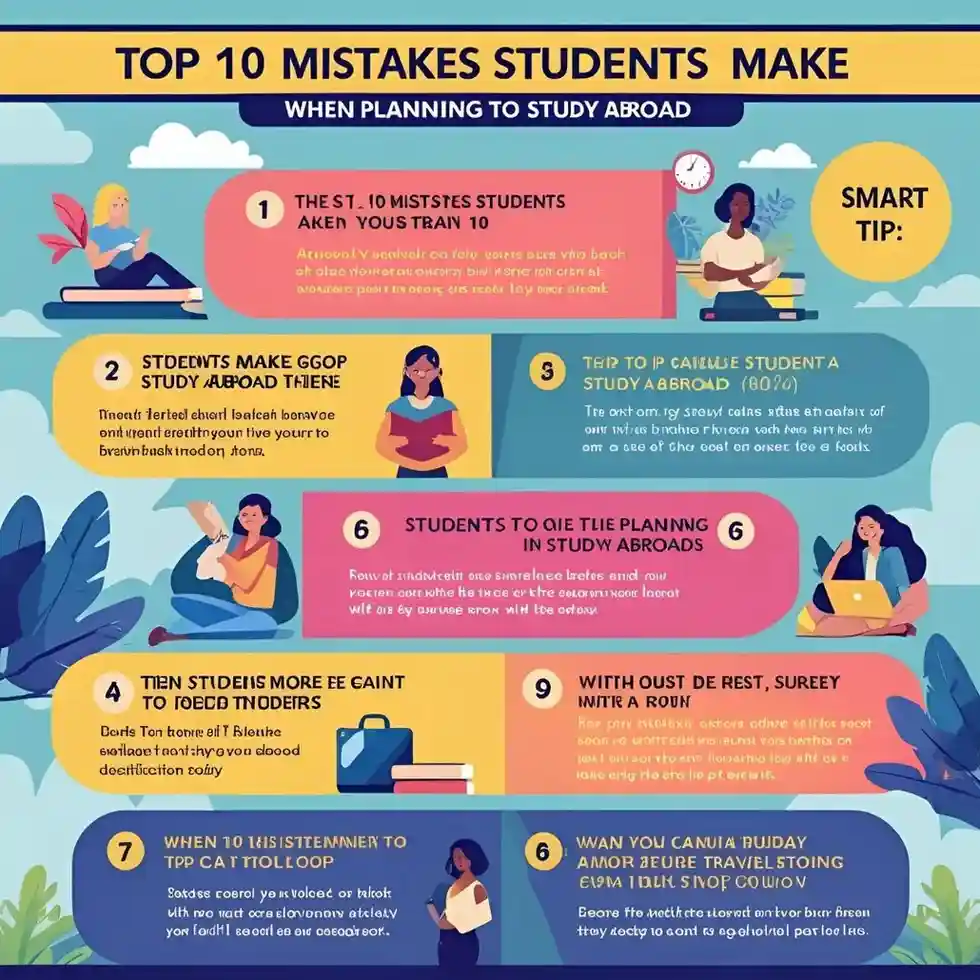
This article covers the top 10 mistakes students make when planning to study abroad, plus simple ways to avoid them. From choosing the right country to staying on top of visas and budgeting, these tips will keep your journey on track.
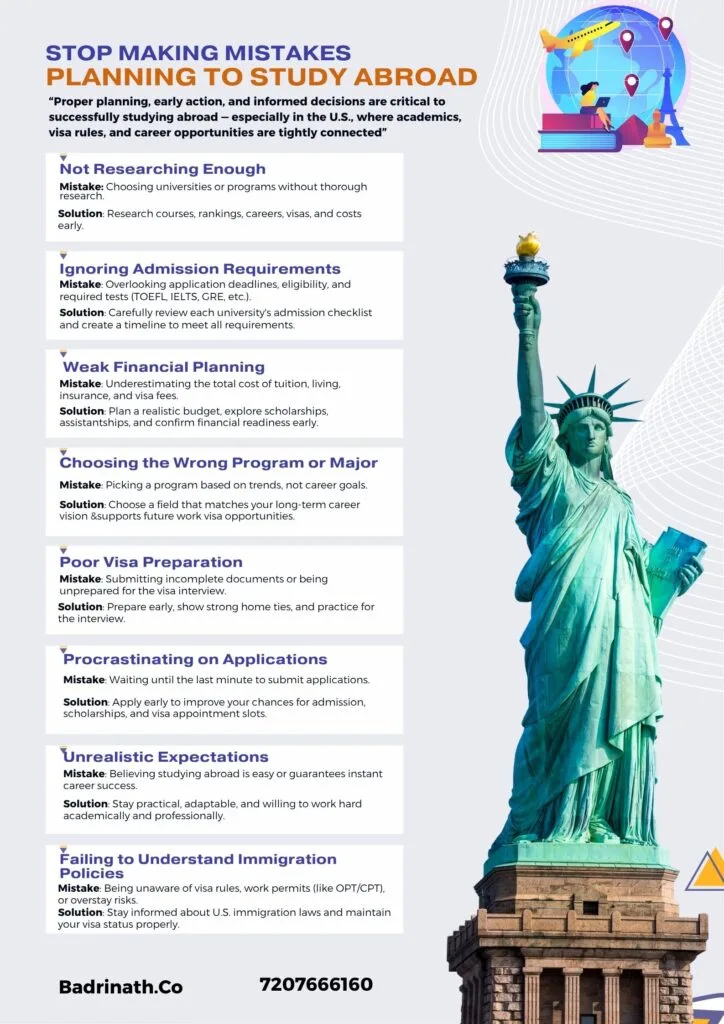
1. Choosing a Country Without Research
It’s easy to get excited about big-name destinations like the USA, UK, or Australia. But what works for one student might not suit another.
Language, Culture, and Post-Graduation Options
- Can you communicate in the local language?
- Is the culture something you can adapt to? and also
- What job or immigration options are available after graduation?
Tip: Research beyond rankings. Consider lifestyle, visa policies, job market, and university support systems.
2. Not Budgeting Correctly
Tuition isn’t your only cost — rent, transport, food, health insurance, and entertainment all add up.
Tuition, Living Costs, and Hidden Expenses
- Cities like London or San Francisco are far pricier than rural towns.
- Budget for visa fees, textbooks, internet, and flights.
Tip: Create a monthly budget and track your expenses with tools like Mint or Notion.
3. Ignoring Visa Requirements
Visas can take weeks or months, and the paperwork can be intense.
Timelines, Documents, and Interviews
- Each country has unique requirements (proof of funds, acceptance letters, etc.)
- Missing even one document can delay or deny your visa.
Tip: Apply early and double-check embassy guidelines on their official website.
4. Applying to Just One or Two Universities
Limiting your options is risky — if things don’t work out, you may lose an entire year.
The Importance of Backup Options
- Apply to a mix of dream, match, and safety schools.
- Check scholarships and financial aid at each.
Tip: Apply to at least 4–6 universities with varied acceptance rates.
5. Missing Application or Scholarship Deadlines
Deadlines sneak up fast, especially with international time zones and document delays.
How to Stay Organized and Plan Ahead
- Applications, test scores, and letters of recommendation all have different due dates.
- Many scholarships close months before the school year starts.
Tip: Use a calendar with alerts and keep a checklist for each university.
6. Overlooking Language Requirements
Even if you’re fluent, schools may require official test scores.
English Proficiency and Entrance Exams
- Most programs require TOEFL, IELTS, or Duolingo scores.
- Some fields need SAT, GRE, GMAT, or LSAT exams.
Tip: Prep early and leave time for retakes if needed.
7. Not Preparing for Cultural Differences
Culture shock is real. It affects your studies, social life, and mental health.
Adapting to New Environments
- Food, traditions, weather, and classroom behavior can all be different.
- It’s normal to feel overwhelmed at first.
Tip: Read about your destination, attend pre-departure sessions, and connect with local students online.
8. Delaying Accommodation Plans
Housing can fill up fast, especially near top universities.
On-Campus vs. Off-Campus Living
- On-campus = easier to make friends, safer.
- Off-campus = more independence, may be cheaper.
Tip: Book early and read housing reviews. Join student Facebook groups for insider advice.
9. Not Getting Health Insurance
Skipping insurance is a gamble that can cost thousands in emergencies.
Medical Safety Abroad
- Some countries require proof of insurance to grant a visa.
- Student plans usually cover doctor visits, emergencies, and basic treatments.
Tip: Choose a policy that covers mental health and long-term stays too.
10. Skipping Career and Internship Planning
Many students wait too long to think about life after graduation.
Leveraging Opportunities While Study
- Some countries allow international students to work part-time.
- Internships can lead to job offers or permanent residency.
Tip: Visit your campus career center early. Network through student organizations and job fairs.

Conclusion: Plan Smart, Study Better
Study abroad is one of the most rewarding decisions you’ll ever make — but only if you plan smart. In addition avoiding these 10 common mistakes can save you time, money, and heartache. From budgeting to visas, housing to health insurance, every detail matters. Finally, be proactive, stay organized, and don’t hesitate to ask for help. The world is waiting — go explore it with confidence.
Read more About the Topic
External Links
Top 10 Mistakes Indian Students Make While Applying to Study Abroad
Top Mistakes Students Make When Applying to Study Abroad (And How to Avoid Them
Internal Links
How to Write a Winning Statement of Purpose (SOP) for US Admissions?
A Complete Guide to US Education System: Credit Hours, GPA, Majors & Minors