






The EB-1 and EB-2
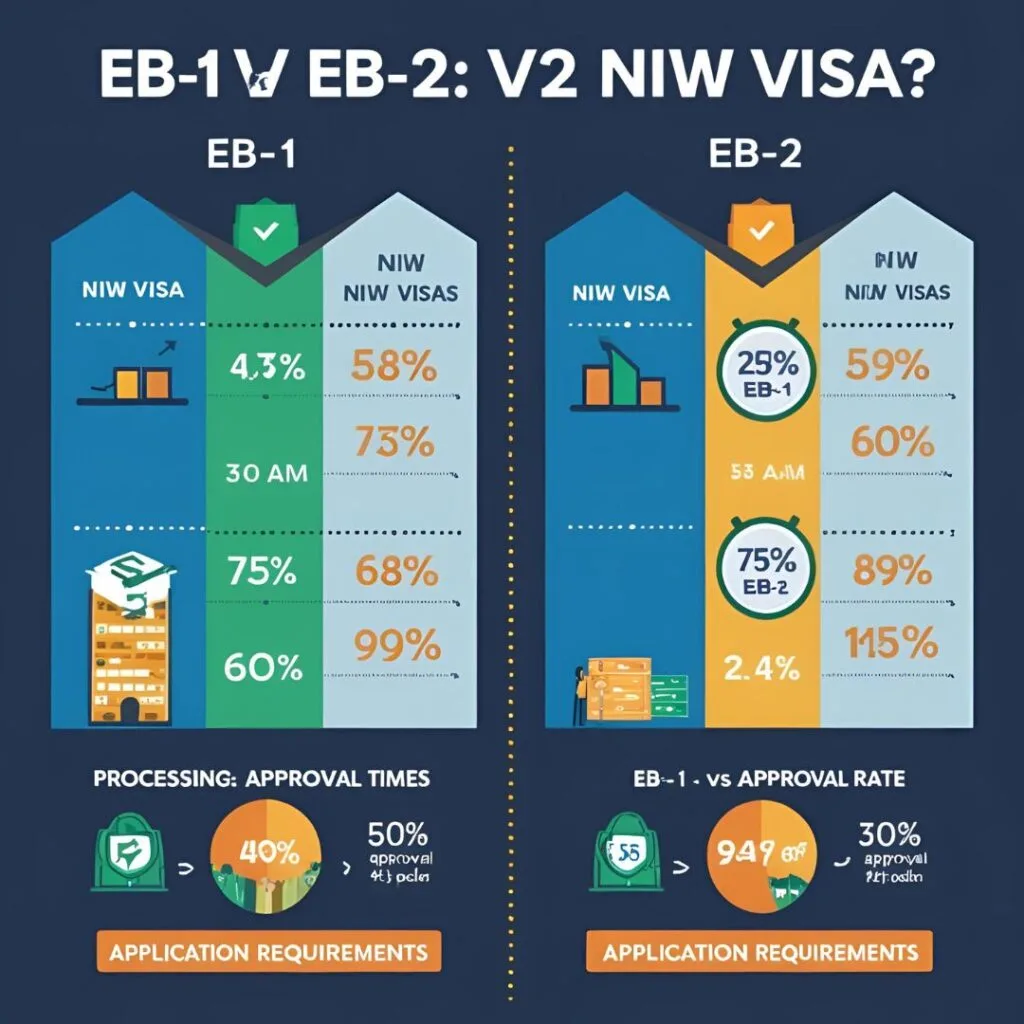
The EB-1 and EB-2 NIW (National Interest Waiver) represent two of the most sought-after employment-based green card categories. While both lead to permanent residency, they differ significantly in processing timelines and requirements.
Processing Timeline for The EB-1 and EB-2
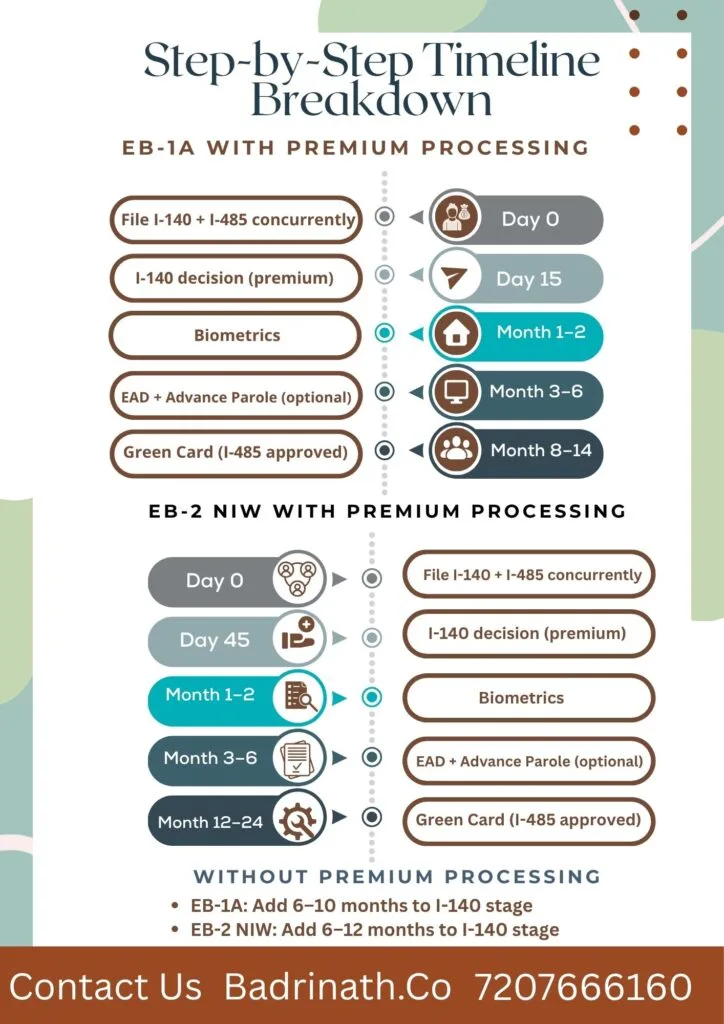
EB-1 Processing Timeline
The EB-1 category (for individuals with extraordinary ability, outstanding professors/researchers, or multinational executives/managers) offers a streamlined path to permanent residency. The EB-1 is significantly differ for the EB-2 in processing and timelines.
Without Premium Processing:
- I-140 petition: 14-16.5 months depending on the specific the EB-1 subcategory and service center handling the case.www.immi-usa.com
- I-485 Adjustment of Status: Approximately 6.9 months for employment-based applications.www.boundless.com
- Total timeline (non-backlogged countries): 1-3 years from start to finish.
With Premium Processing:
- I-140 petition: 15-21 calendar dayswww.boundless.com
- I-485 Adjustment of Status: Still approximately 6.9 months (premium processing not available)
- Total timeline: Can reduce overall processing by nearly a year
EB-2 NIW Processing Timeline
The EB-2 NIW allows professionals with advanced degrees or exceptional ability to self-petition without employer sponsorship or labor certification:
Without Premium Processing:
- I-140 petition: 6-9 monthsarvian-immigration.com
- I-485 Adjustment of Status: 6.9 months (same as EB-1) and also
- Total timeline (non-backlogged countries): 2-5 yearsarvian-immigration.com
With Premium Processing:
- Premium processing is NOT available for NIW petitions specifically, creating a significant timeline difference from regular EB-2 cases.arvian-immigration.com
Key Advantages in Processing Steps
EB-1 Advantages:
- No PERM Labor Certification required, saving 12-24 months compared to regular EB-2 casesarvian-immigration.com
- All EB-1 subcategories eligible for premium processing and also
- Concurrent filing of I-140 and I-485 often possible, providing earlier work authorization
EB-2 NIW Advantages:
- Bypasses PERM Labor Certification (like EB-1), saving 12-24 months compared to regular EB-2 casesarvian-immigration.com
- Self-petition option (no employer required)
- Priority date may be current for some nationalities
Country-Specific Considerations
Processing times vary dramatically based on the applicant’s country of birth:
EB-1 Country Variations:
- India: Approximately 3-year wait from priority date (current final action date: April 15, 2022)arvian-immigration.com
- China: Approximately 2-year wait (current final action date: January 1, 2023)arvian-immigration.com
- All other countries: Generally current (no backlog)
EB-2 NIW Country Variations:
- India: 14+ years wait time in extreme casesarvian-immigration.com
- China: Significant backlog, though less severe than India
- All other countries: Less significant backlogs
Strategic Optimization Approaches
Several strategies can optimize processing timelines:
- Premium Processing: For eligible petitions, reduces I-140 processing to 15-21 days for an additional $2,500 fee.arvian-immigration.com
- Concurrent Filing: When priority dates are current, filing I-140 and I-485 simultaneously reduces overall wait time.arvian-immigration.com
- Category Switching: Applicants with approved EB-2 petitions may “port” their priority date to EB-1 if they later qualify, potentially reducing wait times.arvian-immigration.com
- Service Center Selection: Processing times can vary by USCIS service center; electronic filing may allow USCIS to route to less congested centers.www.immi-usa.com

Conclusion
the EB-1 and EB-2 pathways offer advantages, EB-1 generally provides faster processing, especially with premium processing. EB-2 NIW offers the benefit of self-petition but lacks premium processing options. For applicants from India and China, the timeline difference is particularly significant, with EB-1 offering substantially shorter waits. Finally the optimal choice depends on individual qualifications, country of birth, and specific priorities regarding processing speed versus eligibility requirements.
Keywords
- EB-1A processing time
- EB-2 NIW premium processing
- I-140 timeline comparison
- Green card for researchers
- The EB-1 and EB-2 NIW
- Adjustment of status timeline
- Immigration for PhDs
- USCIS premium processing
- EB-2 visa bulletin delays
- Self-petition green card
Read More About the Topic
External Links
Exploring the Differences: What Is EB1 and EB2 Visa Categories
What is the difference between EB1, EB2 and EB3
Internal Links
How Retrogression and the Visa Bulletin Affect Indian/Chinese PhD Applicants